What Is the Function of STEM for Kids: A Clear, Practical Breakdown
STEM stands for Science, Technology, Engineering, and Mathematics. You already know that. But “what does it actually do for kids?” is a sharper question, and one worth answering with real precision. The function of STEM education goes well beyond teaching kids to code or build bridges. It rewires how children approach problems, make decisions, and handle failure. That matters far more than any single skill they pick up along the way.
The Core Function: Building a Problem-Solving Mindset
The primary job of STEM for kids is to install a problem-solving mindset early. Children who work through STEM activities learn to look at a broken situation, identify what they know, figure out what they need to find out, and then test a solution. That loop, repeated across dozens of projects and experiments, becomes a habit.
Traditional rote learning asks kids to absorb answers. STEM asks them to generate answers. The difference is significant. A child who memorizes the water cycle can describe it on a test. A child who builds a rain gauge, records data for two weeks, and spots a pattern in their results understands it at a much deeper level.
How Each Discipline Contributes to a Child’s Development
Each letter in STEM carries a specific developmental benefit. They work best together, but it helps to see what each one brings to the table on its own.
| Discipline | Primary Function for Kids |
|---|---|
| Science | Builds curiosity and teaches evidence-based thinking |
| Technology | Develops digital fluency and logical sequencing |
| Engineering | Trains iterative thinking and hands-on design skills |
| Mathematics | Sharpens quantitative reasoning and pattern recognition |
Science teaches kids to ask “why” and then go find out. Technology teaches them that instructions have to be exact, because a computer does exactly what you tell it, even if you told it wrong. Engineering teaches them that the first version of anything is a starting point. Mathematics teaches them that abstract relationships can describe the real world with precision.
STEM Develops Skills That Schools Often Miss
Schools are good at measuring what a child knows. They are less structured around measuring how a child thinks. STEM fills that gap by building skills that conventional testing rarely captures.
Here are the key transferable skills STEM builds in children:
- Critical thinking: kids learn to evaluate evidence before accepting a conclusion
- Collaboration: most STEM projects require working in groups toward a shared goal
- Resilience: building something that fails and then iterating builds tolerance for difficulty
- Communication: presenting a hypothesis or explaining a design choice sharpens verbal and written clarity
- Creativity: constraints force creative solutions, and STEM projects are full of constraints
These are the skills employers consistently say young adults lack. STEM education, done well, addresses that gap while kids are still at the stage where habits form easily.
STEM for Kids Is About Early Exposure, Not Early Specialization
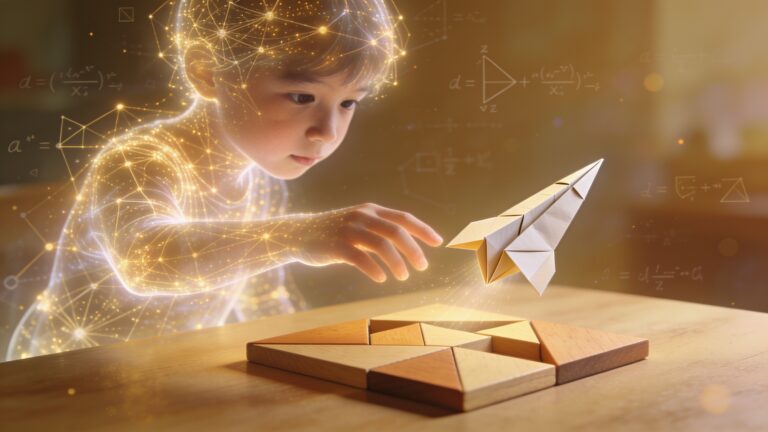
A common misread is that STEM for young children means turning six-year-olds into junior engineers. That reading misses the point. The function of STEM at the early childhood stage is exposure and curiosity, nothing more. A child who takes apart an old clock at age seven is learning that systems have parts that interact. They are laying the foundation for systems thinking, and they are doing it through play.
By middle school, STEM activities become more structured. Kids can follow a design brief, run a controlled experiment, or write a simple program. The goal at this stage is to connect abstract concepts to tangible outcomes.
By high school, STEM education prepares students to engage with real-world complexity. They can analyze datasets, design functional prototypes, and work through multi-step engineering problems. The early exposure made all of that possible.
Why STEM Matters Beyond Career Preparation
A frequent argument for STEM is economic: these fields produce high-paying jobs. That argument is true, but it is also the least interesting reason to care about STEM education for children.
The deeper function of STEM is civic and cognitive. A child who understands how scientific evidence works grows into an adult who can evaluate health claims, environmental policies, and technological risks with accuracy. A child who understands probability grows into an adult who can read statistics critically rather than accepting headlines at face value.
STEM education produces better-informed people, and that benefit extends far beyond any specific job they might hold.
Making STEM Work at Home and in the Classroom
STEM education does not require expensive kits or specialized equipment. Some of the best STEM activities for kids cost almost nothing.
Growing a plant and measuring its height every day is science and mathematics combined. Building a structure from index cards and tape to hold a specific weight is engineering. Writing a simple algorithm, on paper, to sort a deck of cards by number is computational thinking. The activity matters less than the thinking it triggers.
For parents, the most effective move is to resist giving answers immediately. Ask “what do you think will happen?” before an experiment. Ask “why did that break?” after a failure. That habit of guided inquiry reinforces everything STEM tries to build.
For teachers, the research is consistent: project-based learning outperforms lecture-and-test formats for STEM comprehension and retention. Giving kids a real problem to solve, even a simple one, produces more durable learning than presenting a concept and then drilling it.

Key Takeaways
STEM for kids is a framework for developing thinking, not a collection of advanced technical topics. Its function is to build curious, resilient, evidence-driven thinkers who can collaborate effectively and tolerate uncertainty. It does that by giving children problems to solve and tools to solve them with.
Start early with open-ended exploration. Progress toward structured projects as kids grow. Prioritize the thinking process over the correct answer at every stage.
If you are looking for practical STEM activities organized by age, season, and skill level, explore the resources across this site. There is a full year’s worth of ideas waiting, and every one of them is designed with exactly this developmental purpose in mind.